One good teacher can shape hundreds of children, but...
Drag an app to move it. Click or press Enter to dismiss it and show the next app.Scroll
kids today are growing up inside an economy engineered to consume their attention. Wars. COVID. Zoom classes.
Schools were never designed to handle that. Our foundation is here to help.
Programs for teachers and coordinators
The Foundation builds programs that make the everyday work in Israeli classrooms and schools stronger: inquiry-based learning, real practice, and mentors who stay close.
Our first pilot. July 2026
Practice first
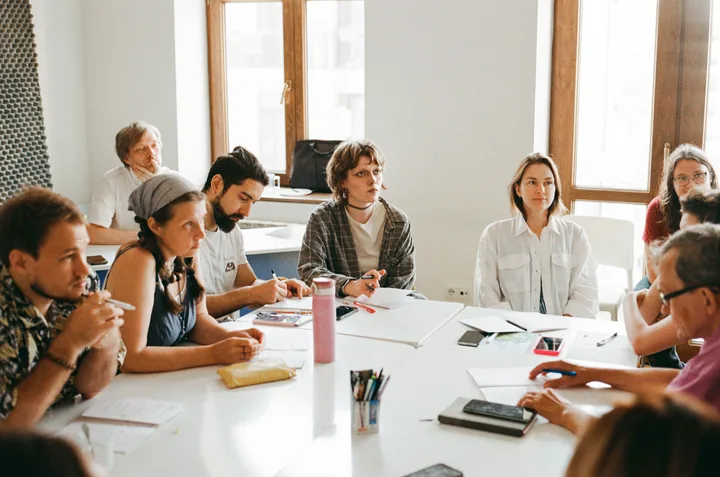
More than half of every program is practice. Each starts with an intensive and moves quickly into practical work: teachers lead lessons with children, while coordinators bring real situations from their schools and work through them together.
Mentors who stay
A mentor stays with the group throughout. Teachers and coordinators meet their mentor in small groups every week, for the whole stretch of practice.
Funding for teachers’ time
Participants receive a stipend for both the training and the practice with children: teachers have more than enough work without us.
Yes, a monthly stipend
We use approaches we trust and that have been well studied, such as inquiry-based learning, activity-based learning, and project-based learning. We don’t have a new pedagogy to sell.
The test is simple: does it still work in a regular class of 35 on a Tuesday morning?
You see the effects of years of classroom disruption better than anyone. We want to give you time to learn, try things out, and work through what happens in the classroom with a mentor.
We start with the later years of primary school and the beginning of middle school — when many children begin to lose interest in learning.
17teachers finished the intensive, July–August 2026
8.8→9.5average recommendation score, after the intensive → after practice
40→81%of answers on the fundamentals at “I understand it and can use it”
60→25%worried about adapting when a lesson goes off plan
Our first intensive in Tbilisi focused on inquiry-based education. We surveyed the same teachers twice: after the intensive, and again after several weeks of teaching children with weekly mentoring.
Teachers’ responses changed noticeably after practice. On the fundamentals — what an inquiry lesson is for, how it differs from a merely engaging one, and what the teacher does — the share of answers at “I understand and can use it” rose from 40% to 81%. Fewer teachers reported being worried about having to adapt when a lesson went off plan.
“I’ve become noticeably less inclined to steer children toward the right answer, and more attentive to how they reason.”
One of the teachers · that’s the change we’re looking for
Not everything became easier. Group dynamics remained difficult, and we’re adding more practice and mentoring around it.
Three-quarters of the children surveyed said they would like lessons like these at school.
Encouraging results, but still from a small group in an unusually friendly setting. We’ll see how they hold up in regular classrooms.
Specific teaching practices
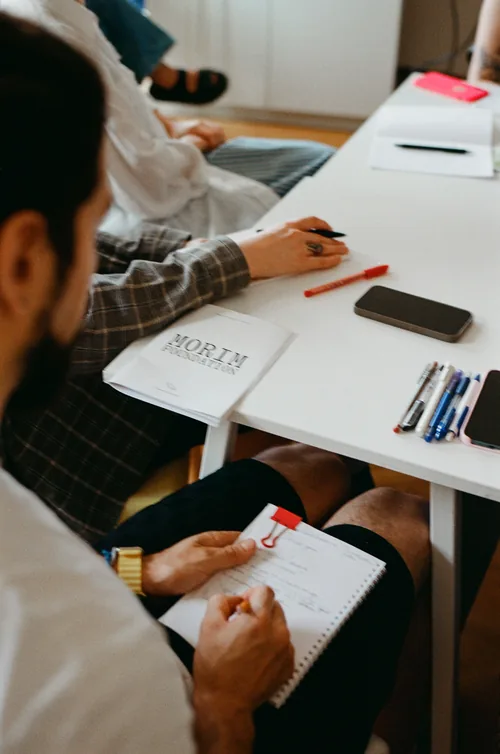
Intensives where we take practical teaching methods apart, try them, and see what happens.
“how do you get a class’s attention without raising your voice?”“how do you build motivation that doesn’t depend on grades?”“how do you start a lesson with a real question?”“how do you get children to look for answers themselves instead of trying to guess what the teacher wants to hear?”
Practice with children
After the intensive, participants spend several weeks teaching children and go over their lessons with a mentor every week. The point is to bring what they learn back to their own classrooms.
A stipend for your time
You have more than enough work without us, so we pay participants a stipend for both the training and the practice with children. If we believe a teacher’s time matters, it makes sense to act like it.
Strong teachers need schools where they can do good work and want to stay. That’s why we work with teachers at more than one level: in their own classrooms and in the teams they help lead.
Our first program for coordinators is being developed together with rakazim themselves. The first pilot is under way with a closed cohort.
Rakazim are teachers too. They teach their own classes and help a whole team work better, often without formal authority over the people they lead. How do you move a team forward when the people in it don’t report to you?
Feedback that actually helps
How do you give feedback that people can use, support colleagues, and help them grow? Participants bring real situations from their schools and work through them together with a mentor.
Making room for the work that matters
How do you distribute the workload across the team and still make time for professional growth — yours and your colleagues’? The program also covers the practical systems and projects that keep a department running without letting coordination take over the time meant for teaching.
For schools and partners
We run our programs with partners: schools that host an extracurricular, organisations that already work with children, and municipalities that want the programs for their own teachers. We are looking for places to practice and people to practice with, not funding.
Schools
A fellow runs an after-hours club with your children during the practice weeks. You give a room, a group, and a contact person; we bring the program, the mentor, and the stipend.
Organisations that work with children
After-school programs, camps, and youth centres can host practice weeks and gain a trained teacher for a season.
Municipalities and networks
Bring the programs to your own teachers and coordinators, cohort by cohort, with practice in your schools.
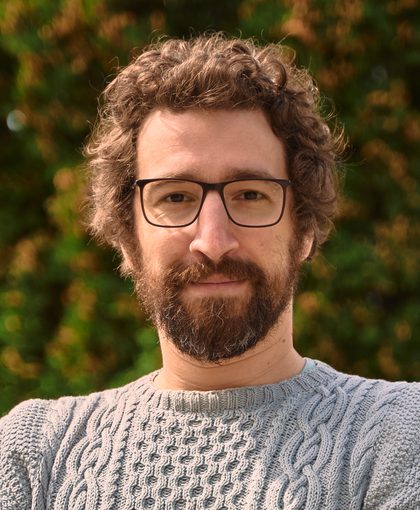
Co-founder of the international hybrid middle school Platan, pedagogical expert and history teacher. Specialist on the gamification of education.
The team
We bring together teacher-development specialists and practicing teachers. We’re also building a circle of experienced Israeli educators and researchers who can tell us when we’re wrong and help us understand the school system from the inside.
FAQ
Who is the Fellowship for?
›
We currently focus on practicing teachers in Israel, in the later years of primary school and the beginning of middle school. If you work with another age group, you can still get in touch and tell us about your experience.
What about AI?
›
We teach teachers to use AI — and to teach children how to use it — instead of training AI to replace teachers.
How is the program structured?
›
Theory and workshops are mixed with practice throughout. Teachers work with children; coordinators bring real situations from their schools. Both meet in small groups with a mentor every week.
Do participants receive a stipend?
›
Yes. Both teachers and coordinators receive a stipend. The amount and payment arrangements will be provided with the details of each program.
Can a school or municipality work with Morim?
›
Yes. We’re interested in working with schools, networks, and municipalities that want to bring our programs to their teachers or coordinators. We’re also looking for experienced educators who can help us build the programs. Read about partnering with us.